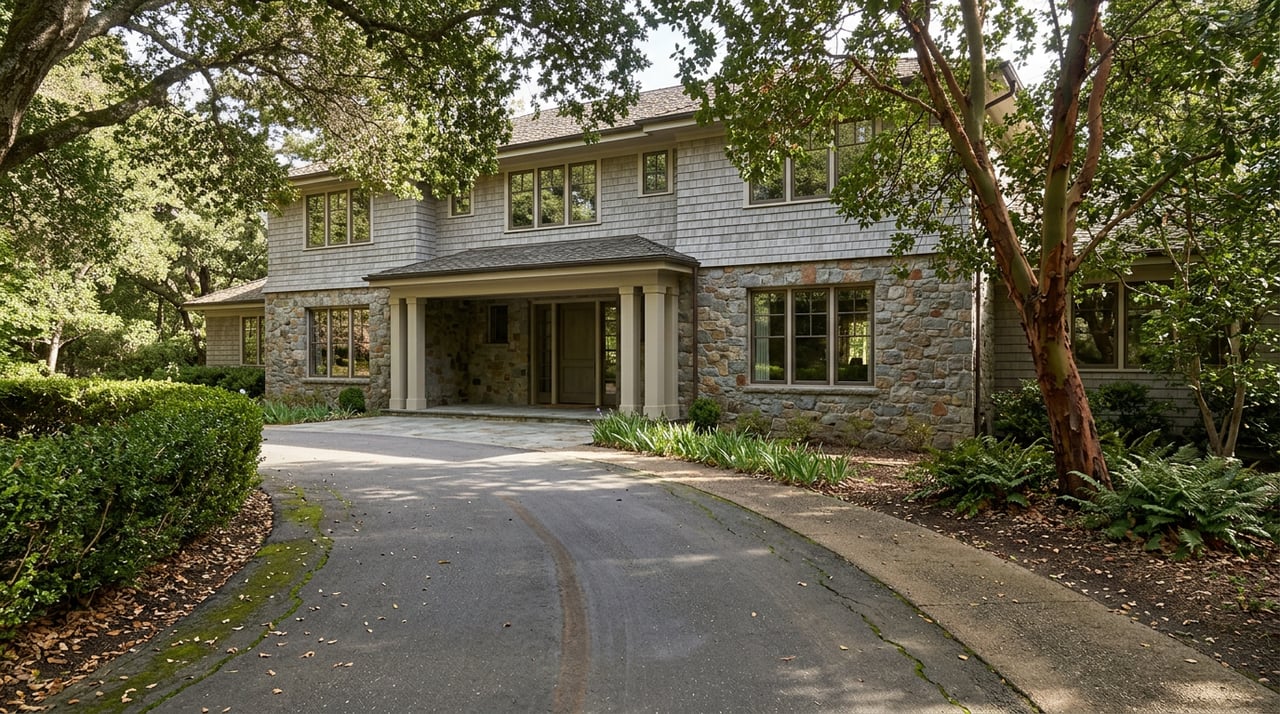
Woodside homes sold in an average of 14 days over the three months ending May 2026, down from 38 days the year before. That number reads like an argument for moving quickly. It's also the number most likely to get a buyer in trouble, because the fastest-moving market on the Peninsula is also the one where a signed contract starts a clock that a city inspection department isn't running for you.
According to Otter Squad, in San Mateo, Burlingame, Hillsborough, San Bruno, Millbrae, Pacifica, and South San Francisco, a home cannot close escrow until the seller produces a sewer lateral inspection certificate. It's a point-of-sale requirement, built into city code, and it forces the paperwork to surface on a fixed timeline whether anyone asks for it or not. Woodside has no such rule. The town sits inside West Bay Sanitary District, which also serves Menlo Park, Atherton, Portola Valley, and East Palo Alto, and that district has never adopted a point-of-sale sewer lateral requirement. Most Woodside parcels aren't even on a sewer main to begin with. They're on private wells and septic systems, which means there's no lateral to inspect and no city department whose job it is to check.
That absence looks like less friction. It's actually a transfer of responsibility. When a city mandates an inspection, the timeline is predictable because the rule forces disclosure. When nobody mandates anything, the diligence still has to happen. It just happens on however much time the buyer and their team choose to spend finding it, which, in a market moving fast, is exactly the time nobody has.
Three systems, one listing sheet
A Woodside estate typically runs on three systems that don't show up as a line item in the disclosure packet the way a roof age or a school boundary does. Each one has its own authority, its own paperwork trail, and its own way of quietly extending a closing date.
| System | Who actually governs it | What can slow a closing |
|---|---|---|
| The road | Recorded easements, road maintenance agreements, or California Civil Code Section 845 if no agreement exists | Lenders want proof of legal access; missing or unrecorded documents trigger title exceptions |
| Water and waste | Private well and septic, permitted through San Mateo County Environmental Health Services | Condition may not be apparent from the seller's disclosure |
| The driveway gate | Woodside Fire Protection District access and Knox Entry System rules | Gates that block fire apparatus access can require a Knox Box or key switch before the district signs off |
None of these three rows are handled by the same office, and none of them are things a standard home inspection is built to catch in the way it catches a cracked foundation.
The road is only as good as its paperwork
A large share of Woodside's estate parcels sit off private roads, and the Town's own contact page is direct about it: for private road issues, residents are told to contact "the appropriate Homeowners Association," not the Town. If a recorded road maintenance agreement exists, it controls who pays for resurfacing, who pays for a washed-out culvert, and how those costs get split. If no agreement was ever recorded, California Civil Code Section 845 steps in and assigns the maintenance duty to the owners who benefit from the road, with courts empowered to apportion the cost if there's a dispute.
That's a workable framework on paper. It becomes a closing problem the moment a lender's underwriter asks for proof of legal access and nobody can produce the recorded easement, or the maintenance agreement referenced in the title report turns out to be twenty years old and silent on who pays for what. A seller's disclosure that says "shared driveway" doesn't tell a buyer whether the underlying documents exist, whether they're current, or whether the road even meets the width and clearance standards the fire district requires.
Water and waste are yours, not the city's
Because Woodside runs on private wells and septic rather than municipal utilities, San Mateo County Environmental Health Services is the office of record for permitting, not a city public works department. The county's land use program exists precisely because, as the county puts it, homes in these unincorporated and semi-rural areas have to install their own water and sewage systems since there's no community version to plug into.
Compare that to a buyer purchasing in Burlingame or Hillsborough, where the point-of-sale rule requires a sewer lateral inspection certificate before the sale can close. That process is annoying and it costs the seller money, but it also means a buyer never has to wonder whether the system was checked. A septic system can be decades old, a well can have a pump nearing the end of its life, so the buyer's team can look for the permit history at the county's Environmental Health office and order their own inspection.
The gate has its own fire code
Long private driveways and electronic gates are common on Woodside estates, and the Woodside Fire Protection District treats them as an access problem, not an aesthetic one. District standards require fire apparatus access roads and driveways to maintain a minimum clear width, generally 20 feet exclusive of shoulders, along with turnouts roughly every 350 feet and a minimum of 13 feet 6 inches of vertical clearance from vegetation. Where an electronic or manual gate could block that access, the district requires a Knox Box or key switch, part of the Knox Entry System, so crews can get through without forcing the gate.
For a buyer, that means a beautiful gated entrance can come with an open compliance question: does the existing gate meet the district's clearance and access requirements, and is a Knox Box already installed and registered, or does that become a post-closing project that should have been priced into the offer.
Before you write, or accept, an offer on a private road
- Pull the preliminary title report and ask specifically for recorded easements, road maintenance agreements, and CC&Rs tied to the parcel, not just a general summary.
- If the property is on well and septic, request the permit history directly from San Mateo County Environmental Health Services rather than relying on the seller's disclosure alone, and order an independent inspection with enough lead time to actually get results back.
- If there's a gated driveway, confirm with the Woodside Fire Protection District whether the gate is registered with the Knox Entry System and whether the driveway meets current width and clearance standards.
- Ask the seller for the sewer or septic contact history on file with the Town, since Woodside splits this by geography: homes east of Highway 280 or in the Glens neighborhood go through Fair Oaks Sewer Maintenance District, while everywhere else on public sewer runs through Town Hall directly.
- Build the timeline around these answers, not around the 14-day average. A market moving fast is not the same as a transaction with no open questions.
A few questions that come up often
If my new home has an automatic gate, do I have to do anything? If the gate could block fire apparatus access, the Woodside Fire Protection District generally requires a Knox Box or key switch as part of its Knox Entry System. Confirming this before closing avoids a compliance conversation after the keys are already in hand.
What happens if there's no recorded agreement for my private road? California Civil Code Section 845 still assigns maintenance responsibility to the owners who use the road, and allows courts to divide the costs if the neighbors can't agree among themselves. A recorded agreement is far cleaner, but its absence doesn't erase the obligation.
A market moving fast rewards buyers and sellers who already know which three offices to call. That's the kind of groundwork that has to happen before an offer goes in, not after it's accepted. If you're weighing a purchase or a sale on one of Woodside's private roads, Stephanie Elkins can walk through the specific documents your parcel will need and help you build a timeline that accounts for them from the start. Request a Private Valuation to begin.
This article is general information, not legal, tax or financial advice. Consult a qualified professional about your situation.