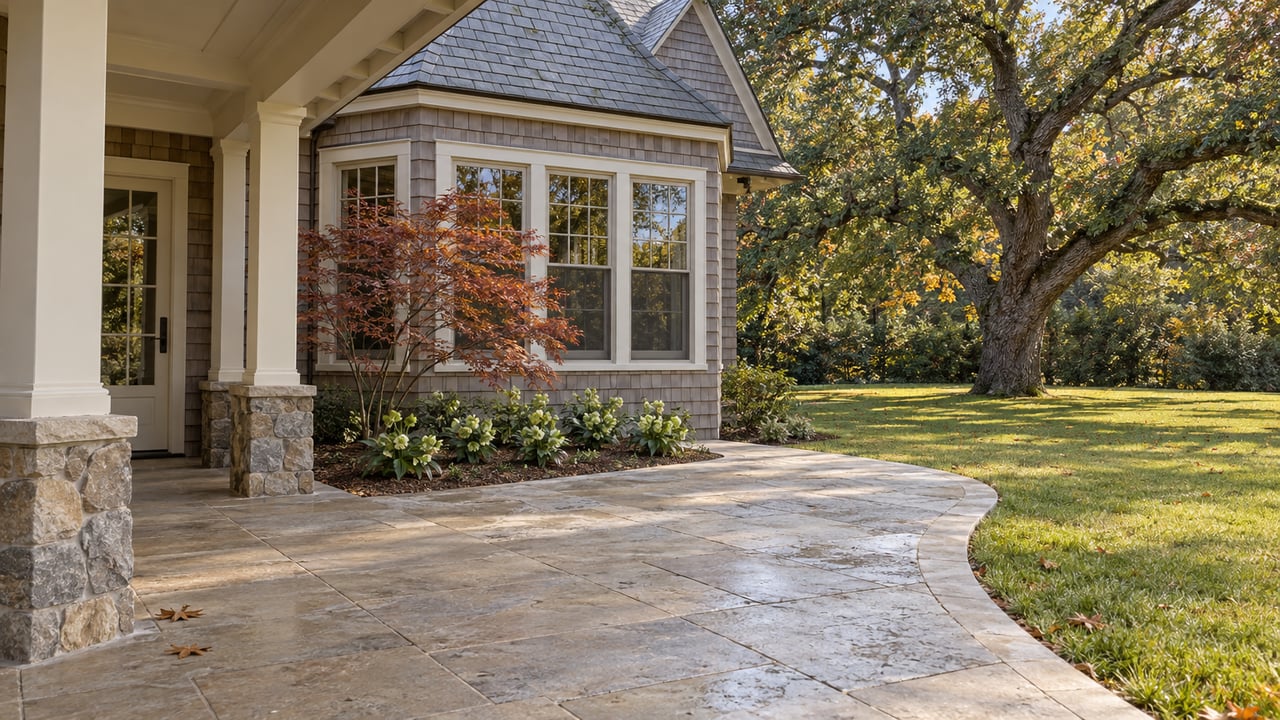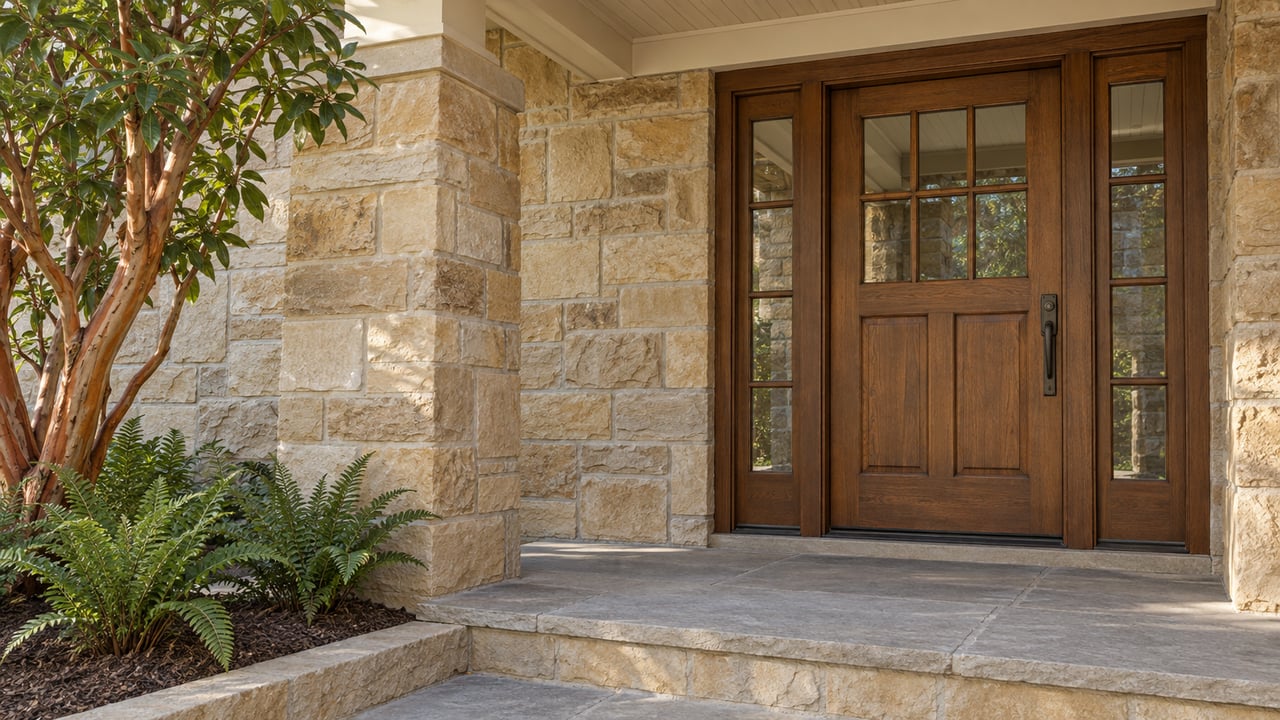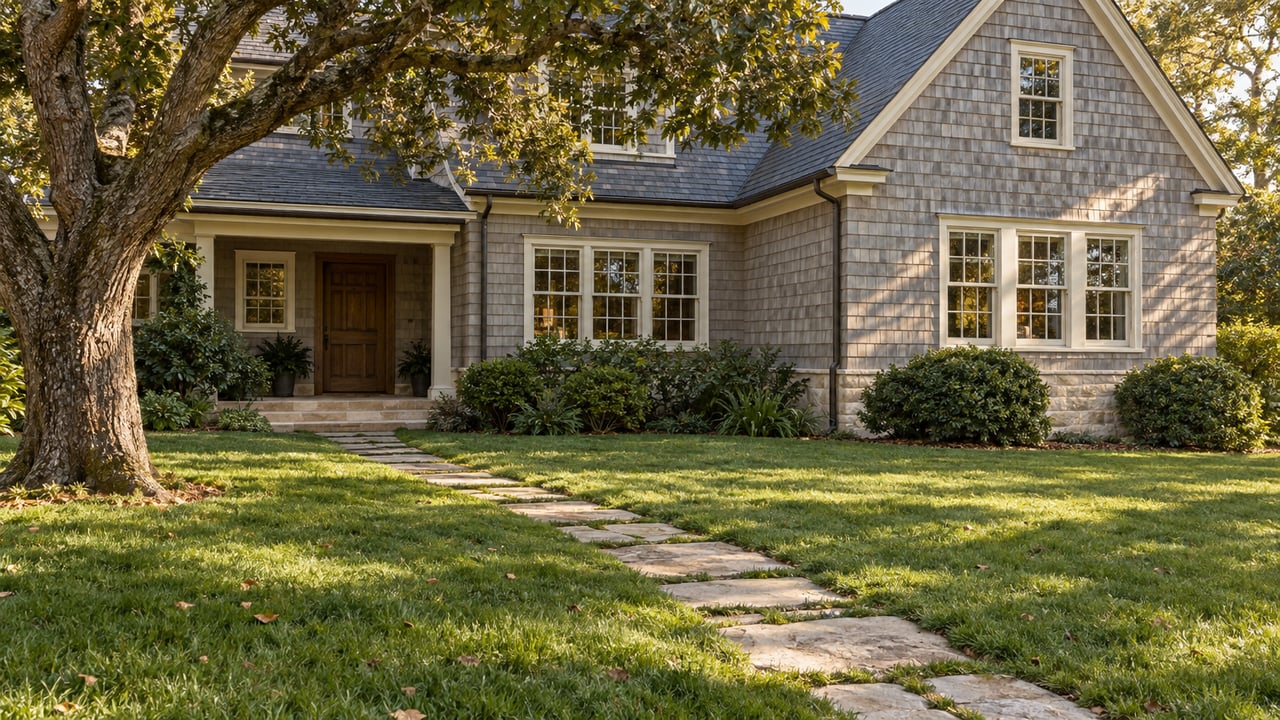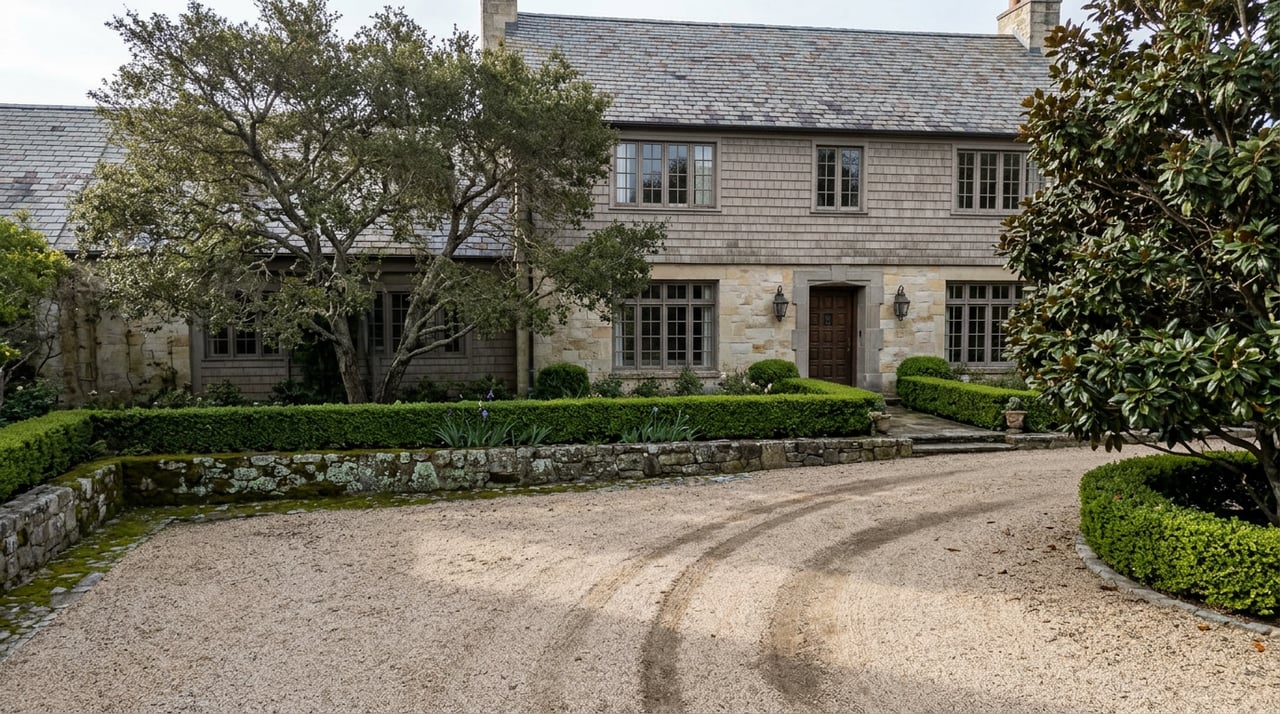
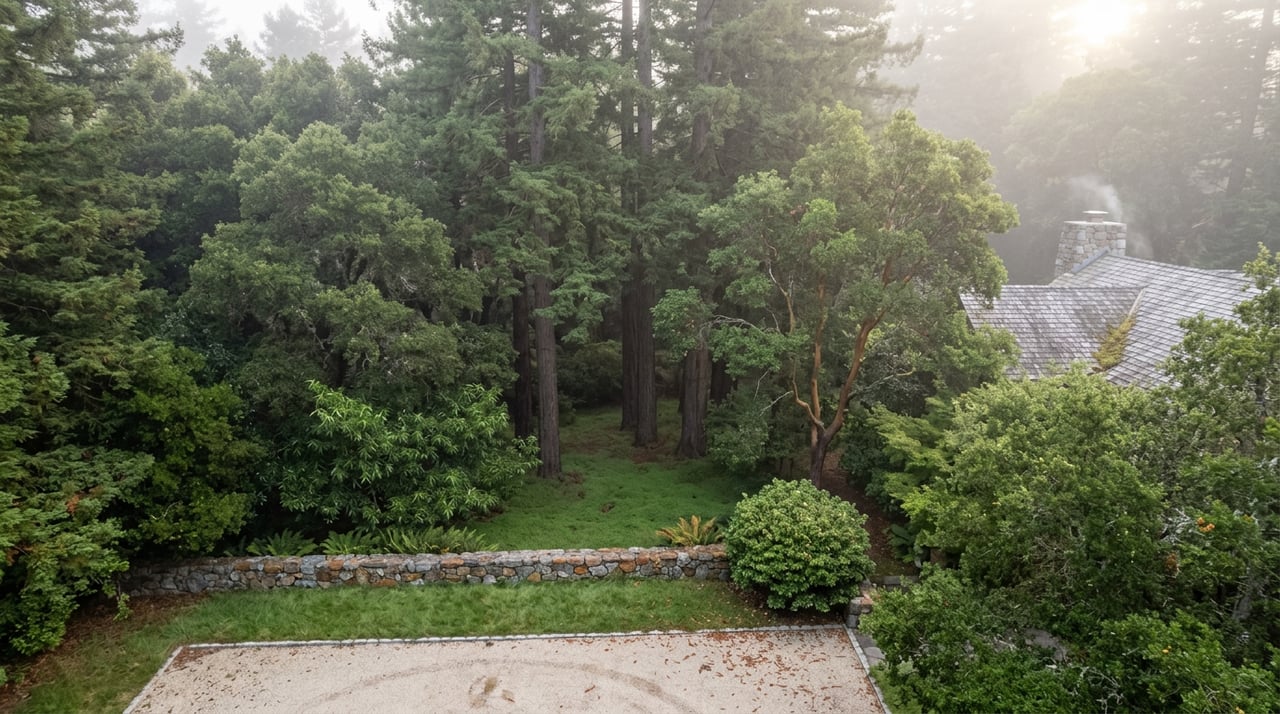
A 32-acre estate on Harcross Road came back to market this summer asking $50 million. The same property sold for just over $20.5 million in 2020. Nothing about the 1933 Pennsylvania Colonial house on it changed in a way that would explain more than doubling its price in six years. Seven bedrooms, roughly 7,200 square feet, a formal English garden planted decades ago by the daughter of one of Lake Tahoe's founding ski families. It is a lovely, dated house on a lot most Peninsula buyers will never get the chance to touch.
Which is exactly the point. The listing is less a sale than a live experiment testing whether Woodside land itself has doubled in value while the structure sitting on it stayed essentially frozen in 1933. If you are comparing Woodside to Atherton, Menlo Park, or Portola Valley on price per square foot, that experiment is the number you actually need to understand before any of the others make sense.
The house is the least stable part of the price
In most Peninsula markets, price per square foot tells you something real about finish level, kitchen quality, how recently the roof was replaced. In Woodside, that math can be less informative because parcel size and development rules can matter as much as the house itself.
Woodside's zoning code ties nearly everything to lot size and slope rather than to the building itself. In the SCP-10 district, for example, a property has to exceed 3.68 acres before an owner can even apply for the exception that allows an 8,800 square foot residence. Accessory dwelling unit allowances scale with lot size on the same sliding basis: a parcel under one acre is limited to a single ADU, while a parcel of 1.5 acres or more can carry two. A separate calculation, tied to the lot's average slope, sets how much of the parcel has to stay in its natural, undeveloped state, a figure most buyers moving from Menlo Park or Palo Alto have never had to price into an offer. None of this is about what the current house looks like. It is about what the land is zoned to hold.
That is why a median sale price of $5.2 million over the three months ending May 2026, up 11.4 percent year over year with homes selling in an average of 14 days, tells you almost nothing about renovation quality across those sales. It tells you buyers are competing for acreage and the rights attached to it, and they are doing it fast, because so little of it comes to market in any given year.
How Woodside and Atherton differ on new construction
Ken DeLeon, whose firm works with high-end developers and buyers across both towns, put the contrast bluntly to The San Francisco Standard when the Harcross listing surfaced in late July: Atherton is the easiest luxury Peninsula town to build in, and Woodside is probably the hardest. That is not a marketing line. It is a description of two different regulatory environments wearing similar price tags.
"Atherton is show and tell. 'Look at me. I've done so well,'" DeLeon said. "Woodside is hide and seek."
The line captures a real difference in what buyers in each town are optimizing for, and it explains why the two markets price similar acreage so differently. Atherton buyers are often paying for the ability to build something new and visible relatively quickly. Woodside buyers are paying for privacy and scale, while recognizing that new construction can take multiple years and may be affected by preservation review.
Any Woodside residence over 50 years old proposed for demolition needs a historical evaluation report from a qualified architectural historian, according to Woodside Planning Director Sage Schaan. That report weighs the building against the Secretary of the Interior's standards for historic preservation to determine whether it qualifies for protected status; the review may delay or prevent a teardown before construction begins. Hoodline reports that the San Andreas Rift Zone runs through much of the town and triggers additional geotechnical review. Add higher insurance costs on top of standard permitting, and DeLeon's estimate that a full teardown and rebuild at the Harcross scale would take about five years starts to look less like a worst case and more like the baseline.
Here is how the two towns compare on factors that can affect a buyer's plans:
| Consideration | Woodside | Atherton |
|---|---|---|
| Ease of new construction | Hardest of the two, per DeLeon | Easiest of the two, per DeLeon |
| Pre-demolition review | Historical evaluation required for structures over 50 years old | — |
| Seismic overlay | San Andreas Rift Zone runs through much of the town, adding geotechnical review | Not a defining factor |
| Typical teardown-rebuild timeline | Roughly five years, according to DeLeon | Generally faster |
| Second main residence | The Real Deal reports that a second main residence is possible only above 10 acres via a conditional use permit, and Schaan says no one has used it | — |
That conditional-use-permit path remains untested; as far as the town's planning director knows, no one has used it.
What the number on the flyer is actually made of
With those requirements in mind, the cost figures offer another point of comparison. Custom construction in Woodside currently runs $450 to $900 or more per square foot, before accounting for hillside site work that can add another 15 to 30 percent, fire zone compliance in the $50,000 to $120,000-plus range, and septic or well infrastructure on properties without municipal service running $30,000 to $130,000 or more. A full design-to-move-in timeline typically stretches 18 to 30 months even on projects that clear historical and geotechnical review without a fight.
Against that backdrop, teardown candidates in Woodside are commonly priced from around $3 million for more accessible parcels up to $15 million or more for premium hillside sites with views, and those prices reflect the land and its development rights far more than the condition of whatever is currently built on it. Vacant lots, when they surface at all, tend to command a premium precisely because they avoid the demolition and historical-review process.
This is the piece that gets lost when a buyer relocating from outside the Peninsula compares a Woodside listing to one in Atherton or Menlo Park using price per square foot alone. A lower psf figure in Woodside is not automatically a better deal. It may simply reflect a large, older house sitting on land whose real value lies in the acreage and the zoning attached to it, not in the square footage currently standing there. The Harcross relisting is testing that exact question at a scale most buyers will never encounter, but the same logic applies at every price point in town.
What to ask before you fall for the acreage
If you are weighing a Woodside property against something comparable in Atherton or Portola Valley, the questions that matter most rarely show up on a listing sheet. How old is the existing structure, and does it clear the 50-year threshold that triggers historical review. What is the lot's average slope, since that number determines how much of the parcel counts toward net acreage and, in turn, the maximum floor area the Town will allow. What would pursuing the conditional use permit path for a second residence involve, and are you prepared to be among the first to use it? And realistically, if the house needs to come down, can your timeline absorb something closer to five years than five months.
None of this makes Woodside a harder place to own. It makes it a different kind of asset than a house in a town built for faster turnover. The land, the rulebook governing it, and the patience required to work within that rulebook are the product. The house is simply what happens to be sitting on it the day you buy.
A few questions that come up often
How old does a house have to be before demolition triggers historical review in Woodside? Any residence over 50 years old that is proposed for demolition requires a historical evaluation report from a qualified architectural historian, per the Town's Planning Department. The report assesses the structure against federal preservation standards to determine whether it merits protected status.
Can I build a second home on a large Woodside lot? The Town's planning director has indicated that the conditional use permit option has not been used to date, so a buyer pursuing it would be working through untested territory.
How much longer does a teardown-rebuild take in Woodside compared to Atherton? Local brokers who work in both markets put a full Woodside teardown and rebuild at roughly five years once historical review, geotechnical study, and construction are accounted for, longer than the typical Atherton timeline for comparable projects.
If you are weighing a purchase in Woodside against another inner-Peninsula town and want a clear read on what a specific parcel's acreage, slope, and structure age actually allow, Stephanie Elkins can walk through the zoning and timeline implications before you write an offer. Request a Private Valuation to start that conversation.
This article is general information, not legal, tax or financial advice. Consult a qualified professional about your situation.