What does equestrian living in Woodside actually feel like day to day? For many buyers, it is not just about owning land or having a barn on the property. It is about living in a town where horses, trails, and estate living are woven into the local landscape. If you are exploring this market, understanding how Woodside’s equestrian lifestyle works can help you evaluate properties with more clarity and confidence. Let’s dive in.
Woodside’s Equestrian Identity
Woodside is widely shaped by its rural character and long-standing equestrian culture. Town planning materials describe a strong equestrian identity, and the Town’s Trails Committee is specifically tasked with protecting, preserving, and enhancing the public equestrian and pedestrian trail system.
That identity is not just historical. The Town’s horse guide notes that many residents keep horses, and local community programming continues to reflect that tradition. Events like the annual Day of the Horse trail ride and horse fair help show how deeply horses remain part of Woodside’s community life.
For you as a buyer, this matters because the lifestyle is supported by more than private properties. It is reinforced by town priorities, community habits, and a built environment that continues to value equestrian use.
Trails Shape Daily Life
In Woodside, trail access is one of the biggest factors that defines the equestrian estate lifestyle. The Town guide explains that Woodside and nearby Portola Valley have a trail system made up of public and private pathways that connect to San Mateo County Parks and Midpeninsula Regional Open Space District land.
That wider network gives riders meaningful range. The same guide notes access to the Bay Area Ridge Trail and the San Francisco Watershed, with connected public lands that stretch from the Bay toward the Pacific. Within town, the public equestrian trail map includes roadside trails, dedicated off-road trails, and unimproved dedicated trails.
This creates a lifestyle that extends beyond your front gate. Instead of treating riding as something that only happens in an arena or by trailer, many owners can incorporate trails into regular routines, from casual rides to longer outings through open space.
Nearby Riding Destinations
Woodside’s location also puts several well-known riding areas close at hand. San Mateo County says Huddart Park offers many miles of trails and horseback riding, while Wunderlich Park supports horseback riding and hiking through redwood forest, open meadows, and restored estate buildings.
Midpeninsula Regional Open Space District adds even more options. Midpen says twenty-one preserves allow horseback riding, with nearby equestrian-friendly choices including the South Skyline preserves, Windy Hill, Purisima Creek Redwoods, and Thornewood.
For buyers comparing estate properties, this broader access can be as important as on-site facilities. A property may offer privacy and room for horses, but the surrounding trail network often determines how usable and enjoyable the lifestyle feels over time.
Shared-Trail Etiquette Matters
Because so much riding happens in shared open space, trail etiquette is part of the lifestyle too. Midpen advises that hikers and bicyclists should yield to horses, while horseback riders should stay on designated equestrian trails and keep horses under control.
That may sound simple, but it speaks to something important about Woodside living. The equestrian experience here is closely connected to public open space, so day-to-day enjoyment often depends on thoughtful use of shared trails.
Equestrian Anchors Support the Market
Private estates are only part of the equation in Woodside. The local lifestyle is also supported by established equestrian facilities that provide training, riding opportunities, and care infrastructure.
One of the area’s best-known hubs is the Horse Park at Woodside. According to its official site, the park spans more than 270 gently rolling, oak-studded acres on the border of Menlo Park and Woodside and includes stabling, turnouts, arenas, a nationally recognized cross-country course, trails, and an exercise track.
The Horse Park also reflects how structured and service-oriented local equestrian life can be. It does not allow independent boarders, and owners must affiliate with a resident trainer while purchasing a Full-Use Membership.
Training and Care Resources
The Horse Park lists multiple resident training programs and amenities such as a farrier station and wash racks. Some resident trainers also offer hourly lessons for beginners, which adds flexibility for households with different experience levels.
Another local equestrian presence is the Mounted Patrol of San Mateo County, which operates in Woodside on 23 acres with show rings, warm-up and practice areas, and a 20-stall barn. Together, these facilities help show that Woodside is not simply a place where horse properties exist. It is a place where equestrian life is actively supported.
Wunderlich Park contributes to that picture in a different way. San Mateo County notes that the park includes the restored Folger family ranch stable and supports both horseback riding and hiking, blending estate history with public recreation.
What Horse-Friendly Estates Need
If you are shopping for an equestrian property in Woodside, it helps to look past surface beauty. The Town’s horse guide frames a good horse property as one that can support the horse on site and then supplement that with local facilities and trails.
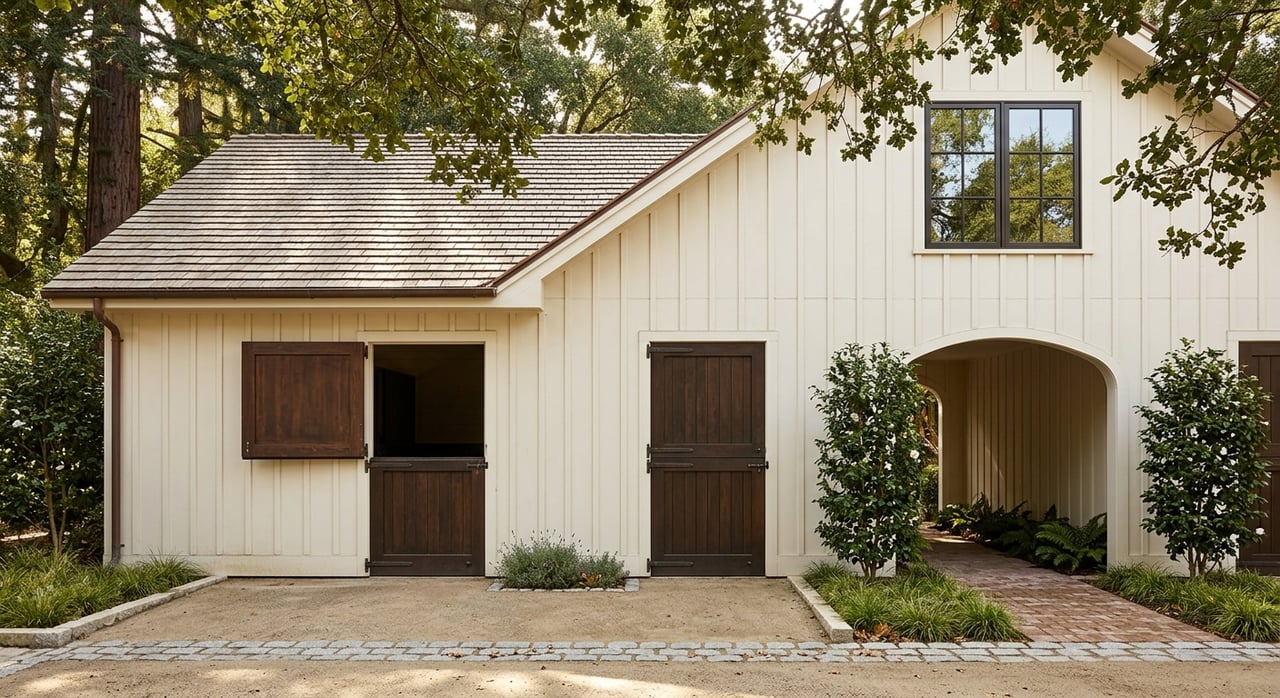
In practical terms, common features may include a stable or barn, stalls, turnouts, paddocks, round pens, arenas, corrals, fencing, wash racks, and hay or feed storage. These are the elements that often make a property usable for horses, not just visually aligned with an equestrian theme.
Woodside’s terrain also makes site planning especially important. The Town guide notes that footing, drainage, and water access matter because conditions can be sloped, hard, dusty, or muddy depending on the season.
Functional Estate Design
For many buyers, the most valuable features are the ones that support circulation and daily use. The Town guide points to wide gates, driveway access to the barn and paddocks, trailer turnaround space, room for vehicles and emergency access, good lighting, and visible water sources.
These details can shape how smoothly a property functions every day. A beautiful estate may photograph well, but horse ownership depends on practical movement, safe access, and infrastructure that works in all seasons.
The guide also emphasizes neighbor-friendly fencing, dust control, manure management, and outdoor storage practices that preserve function while maintaining Woodside’s rural appearance. In other words, strong equestrian design in Woodside usually balances utility with visual restraint.
Aesthetic Fit Still Matters
Function does not replace design in this market. Woodside’s materials make clear that fencing and related improvements should be safe for horses while also fitting the surrounding rural setting.
That balance is part of what makes Woodside estates so distinctive. The goal is often to support serious horse use without losing privacy, landscape character, or the refined appearance expected of estate property.
The Day-to-Day Rhythm
For many buyers, the equestrian lifestyle in Woodside is best understood as a blend of private estate living and trail-based recreation. The Town’s horse guide points to routines built around turnout, on-site exercise areas, trail access, and the ability to haul horses for riding, care, or events.
That means daily life tends to be more horse-centered and property-dependent than in a typical suburban luxury market. Your estate is not just where you live. It may also serve as the base for feeding, turnout, grooming, exercise, and transportation planning.
Seasonal readiness is part of that rhythm too. The Town guide urges owners to think ahead about how horses could leave the property in an emergency, while also maintaining water, fire equipment, and access for trailers, fire vehicles, and veterinarians.
This is less about complexity for its own sake and more about realism. In a hillside, wildfire-aware community, equestrian living includes preparedness alongside beauty, privacy, and recreation.
Why Woodside Appeals to Equestrian Buyers
Woodside’s appeal comes from how well its pieces fit together. You have a town with a clearly recognized equestrian identity, a connected trail network, public open space nearby, established training and boarding anchors, and estate properties that can often be adapted for horse use without sacrificing design quality.
For some buyers, that combination is hard to replicate elsewhere on the Peninsula. It offers privacy and estate scale, but it also supports an active, outdoor way of living that feels rooted in place.
If you are considering a purchase here, the smartest approach is to evaluate both the property and the lifestyle system around it. In Woodside, the best equestrian estates tend to work not only as residences, but as part of a broader network of trails, facilities, and daily routines.
When you are ready to explore Woodside equestrian properties with discretion and a clear strategy, Stephanie Elkins offers thoughtful guidance tailored to complex estate purchases and private Peninsula transactions.
FAQs
What makes Woodside known for equestrian living?
- Woodside is recognized for its strong equestrian identity, rural character, town-supported trail system, and community traditions centered on horses.
What kind of trails are available for horseback riding in Woodside?
- Woodside offers a mix of roadside, dedicated off-road, and unimproved dedicated equestrian trails, with connections to county parks and Midpen open space.
What parks near Woodside allow horseback riding?
- Nearby public riding options include Huddart Park, Wunderlich Park, and several Midpen preserves such as Windy Hill, Purisima Creek Redwoods, Thornewood, and South Skyline areas.
What features should buyers look for in a Woodside horse property?
- Key features may include barns or stables, stalls, turnouts, paddocks, arenas, safe fencing, wash areas, feed storage, drainage, water access, and trailer-friendly circulation.
What is the Horse Park at Woodside used for?
- The Horse Park at Woodside is a major local equestrian hub with stabling, turnouts, arenas, trails, an exercise track, and resident trainer programs.
What is day-to-day equestrian life like in Woodside?
- Daily life often centers on turnout, on-site horse care, trail riding, hauling to training or events, and seasonal planning for access, water, and emergency readiness.